An 8l Electric Pressure Cooker is a countertop appliance with a cooking pot rated at about eight litres. That capacity can suit family meals, batch cooking, or a large pot of stew for later. Picture lentils bubbling beside chopped carrots, or chicken and stock ready for several servings. Convenient, yes—but the number alone does not tell you how much food to load.
The usable amount depends on the cooker’s design and the ingredients. Many pressure cookers have marked fill limits, and foods that expand or foam may need extra space. Always check the manufacturer’s instructions before cooking. Small detail. Important difference. An eight-litre label describes capacity, not a promise that every recipe can safely fill the pot to the rim.
This guide explains what the size means, how it compares with smaller models, and what to consider before buying one. It looks at common features, such as pressure settings, cooking programs, and removable inner pots, without treating every model as identical. You’ll also find practical questions about counter space, storage, cleanup, and the kinds of meals this capacity may handle well. A large cooker can save time on busy evenings, but it may feel bulky in a small kitchen. That trade-off is easy to overlook when shopping. Checking dimensions, capacity markings, and care instructions can help you choose with clearer expectations.
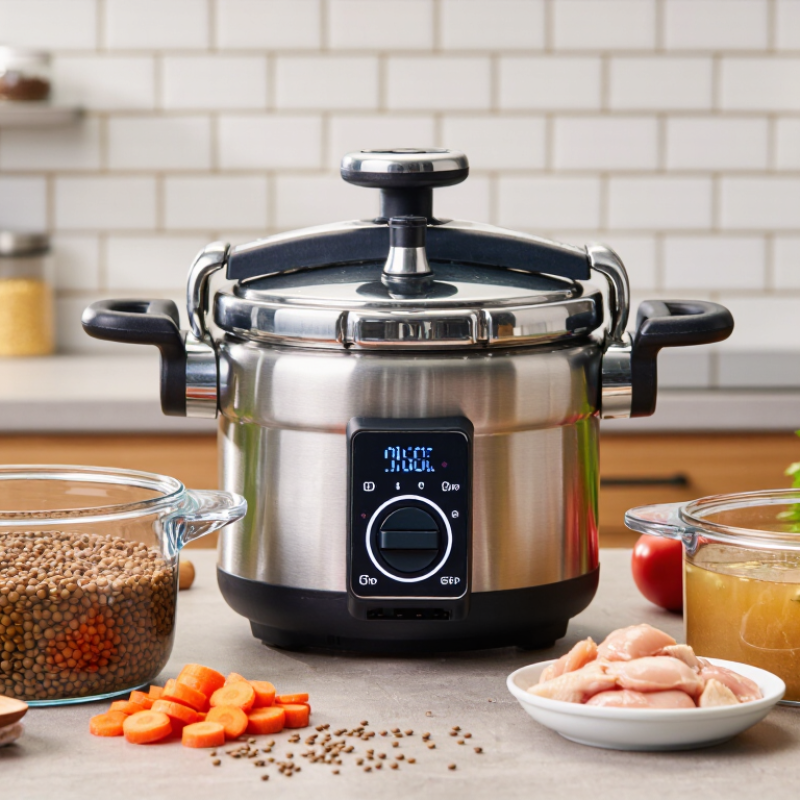
An 8L electric pressure cooker is a countertop appliance with a sealed, removable inner pot. The “8L” refers to the pot’s stated capacity, not the amount of food that should always be loaded. During pressure cooking, steam builds inside the locked pot and raises the cooking temperature above ordinary boiling. An electric heating element and sensors manage heat and pressure, while controls set the cooking time or mode.
That number can mislead. Usable space is lower. Many recipes need liquid, and beans, grains, or soups may foam or expand. The safe fill level can therefore sit well below the rim. Compared with a stovetop model, an electric cooker has an integrated power source and built-in controls. Cooking time still varies with ingredient size, starting temperature, and the pressure cycle. Eight litres may suit batch meals or several portions, but it does not guarantee a particular serving count. A stew occupies space differently from a dense load of rice. Check the cooker’s marked fill limits and instructions rather than treating maximum capacity as a target. Pressure release also deserves care: steam can escape forcefully, and the lid should remain locked until pressure has fallen as directed.
| Dimension | Description | Practical Meaning |
|---|---|---|
| Definition | An 8L electric pressure cooker is a countertop cooking appliance with a removable cooking pot of approximately 8 liters in nominal capacity. | It uses an electric heating element and a sealed lid to cook food under pressure. |
| Capacity conversion | Eight liters equals 8,000 milliliters, approximately 8.45 US liquid quarts. | The stated capacity describes the pot volume; it does not mean the pot should be filled to the top for pressure cooking. |
| Usable fill level | Many pressure cookers have maximum-fill markings. A common general guideline is not to exceed two-thirds full for ordinary ingredients, and to use a lower limit—often about half full—for foods that expand or foam, subject to the appliance instructions. | Leave room for steam and food movement, and follow the specific cooker’s fill markings and manual. |
| How it cooks | The lid seals the cooking chamber. As liquid heats, steam raises the pressure inside, allowing food to cook at a temperature above the boiling point of water at normal atmospheric pressure. | Pressure cooking can shorten cooking time for foods such as beans, grains, and tougher cuts of meat. |
| Typical functions | Depending on the model, functions may include pressure cooking, steaming, slow cooking, sautéing, rice cooking, or keeping food warm. | Available settings and cooking programs vary; check the appliance specifications before purchase. |
| Cooking liquid | Pressure cooking generally requires an appropriate amount of thin liquid to produce steam. The required amount varies by cooker and recipe. | Use the liquid quantity specified in the manual or a tested recipe. Thick sauces alone may not create steam reliably. |
| Safety features | Electric pressure cookers commonly include a locking lid and pressure-control or pressure-release components. Exact safeguards vary by model. | Do not force the lid open while the cooker is pressurized. Release pressure as directed by the manual. |
| What “8L” does not specify | The capacity label alone does not define the appliance’s dimensions, wattage, pressure settings, materials, or included accessories. | Compare the product’s full specifications and available counter or storage space before choosing a cooker. |
Not necessarily. Eight litres is the stated pot capacity, not a safe loading target. Leave room for liquid, steam, and expanding foods.
Check the marked fill lines and the appliance manual. Beans, grains, and soups may need extra space.
Its heating element warms liquid, producing steam inside the sealed pot. Pressure raises the liquid’s boiling point, helping food cook faster.
Inspect the sealing ring for cracks or residue. Make sure it sits correctly and the lid closes securely.
No. Keep the valve clear, and keep hands away from escaping steam. Steam is unforgiving.
It may be safer for foamy foods, which can spray hot liquid during quick release. Follow the recipe and appliance instructions.
Wait until the pressure indicator drops. Never force the lid open while pressure remains.
Leave open space above it so steam does not reach cabinets. Keep children away during pressure release. I still find that clearance easy to overlook.
An 8l Electric Pressure Cooker is an electric countertop appliance designed to cook food under pressure in a sealed pot. Its 8-liter capacity describes the pot’s approximate total volume, not the amount that should always be filled. Because foods and liquids need room to expand and steam to circulate, the safe fill level depends on the recipe and the cooker’s instructions.
Typical parts include an inner cooking pot, a locking lid, a sealing ring, a heating element, pressure and temperature controls, and a steam-release valve. The appliance heats liquid to create steam, then maintains pressure to cook food more quickly. It can be used for dishes such as soups, stews, grains, beans, and tenderized meats, and its larger capacity may suit families or people preparing several portions at once. For safe operation, check that the lid and seal are fitted correctly, keep the steam outlet clear, avoid overfilling, and release pressure as directed before opening.

 Zhenmei Electrical