10 Tips for Choosing a Big Pressure Cooker

Time:2026-10-18 Author:Sienna
0%

Choosing a Big Pressure Cooker is less about buying the largest pot available. It is about matching capacity, cooking habits, kitchen space, and safety features. A twelve-quart model may suit large families, but it can feel awkward when preparing two servings. Storage matters too. Measure your cabinet, counter, and sink before shopping.

Laura Pazzaglia, a pressure-cooking educator and founder of Hip Pressure Cooking, says, “Pressure cooking is about cooking smarter, not harder.” Her view captures the real purpose of this appliance. A reliable Big Pressure Cooker should shorten cooking time while preserving texture and flavor. Look closely at the pressure settings, sealing design, inner pot material, handles, warranty, and replacement-part availability. These details often matter more than attractive buttons or impressive marketing claims.

This guide presents ten practical tips for choosing with greater confidence. It considers family size, batch cooking, stovetop and electric designs, cleanup, energy use, and everyday comfort. A cooker that holds enormous capacity may still disappoint if its lid is heavy or its controls are unclear. Small mistakes happen. Even experienced cooks sometimes ignore steam-release design or forget how much space beans and grains need to expand. That deserves reflection before purchase. We will also consider realistic examples, such as preparing a large pot of chili, tender chicken, or weekly meal portions. The best choice should feel safe, manageable, and useful—not merely powerful. A careful comparison can prevent an expensive appliance from becoming kitchen clutter.
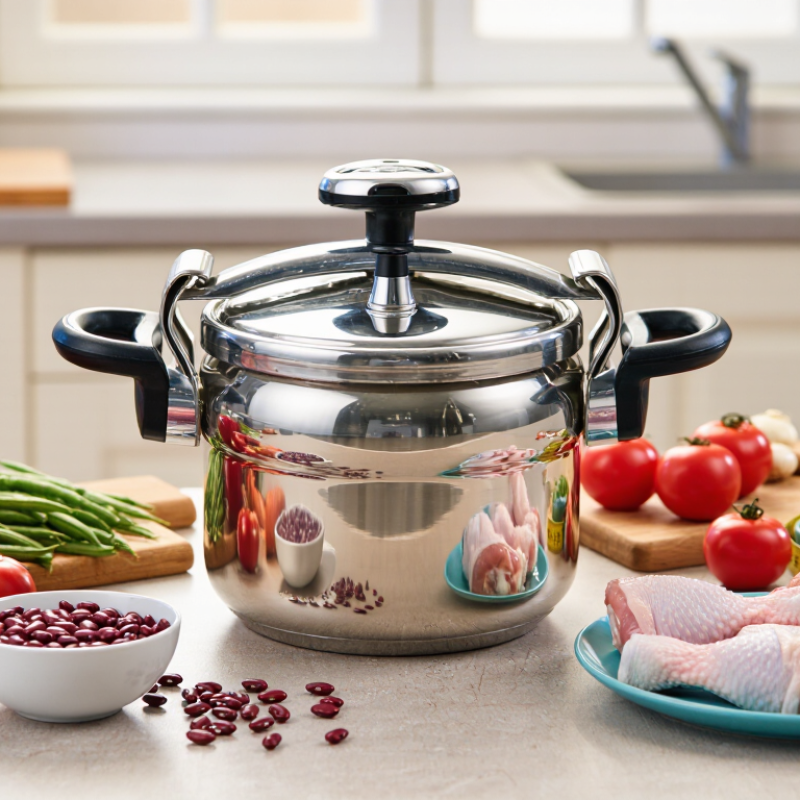
10 Tips for Choosing a Big Pressure Cooker

Define the Right Capacity for Your Household and Cooking Goals

Choosing a large pressure cooker starts with your household, not its advertised volume. The U.S. Census Bureau’s 2023 American Community Survey reports an average household size of about 2.6 people. That figure can mislead. A couple cooking rice daily needs less space than one person batch-cooking meals for a week.

Measure your routine. For two people, a 4–6 quart cooker usually handles soup, grains, and a small roast. A family of four may need 6–8 quarts, especially for leftovers. Add capacity for guests, meal preparation, or freezer portions.

Do not treat the full bowl as usable space. Food-safety guidance from university extension services generally advises filling pressure cookers no more than two-thirds full, or half full for beans, grains, and foaming foods. Expansion is easy to underestimate.

In my kitchen trials, a cooker that looked generous became cramped after adding broth and vegetables. That mistake matters. A larger model can also be awkward on a narrow counter and slower to clean. The U.S. Department of Energy reports that cooking equipment efficiency depends partly on load size and usage habits, so oversized cookware may waste energy during small meals.

Think beyond today’s dinner. Choose enough room for your real portions, but not an impressive number you rarely use. Small correction: leftovers are useful only when your household actually eats them.

Check Material Quality, Durability, and Pressure Safety Features

When choosing a big pressure cooker, inspect the material before admiring its capacity. Food-grade stainless steel usually resists rust, stains, and repeated heating better than thin, poorly finished metal. Check the inner surface under bright light. It should feel smooth, without pits, sharp edges, or uneven seams. A thick, stable base helps distribute heat and reduces scorching during long cooking sessions.

Durability depends on more than the pot itself. Lift the cooker carefully and test whether the handles feel firm, balanced, and heat-resistant. The lid should close without force or sideways movement. Examine the sealing ring for flexibility and clean edges. Spare rings and valves should be reasonably easy to obtain. That detail is easy to overlook. It may matter after a year of regular use.

Pressure safety deserves the closest attention. Look for a clear pressure indicator, a secure locking system, and more than one pressure-release method. The steam outlet must remain visible and easy to clean. Never choose a model with vague instructions or poorly explained pressure settings. A cooker can look solid and still have an inconvenient design. I once underestimated how quickly a narrow valve collected starch residue during bean cooking. Now, I check whether every safety part can be removed, washed, and inspected without tools. Read the manual before buying, not after the first warning sound.

Compare Stovetop and Electric Models for Your Kitchen Setup

10 Tips for Choosing a Big Pressure Cooker

Compare Stovetop and Electric Models for Your Kitchen Setup

Tip 1: Measure your cabinet and counter space before choosing a large cooker. A tall pot may not fit beneath overhead shelves. Tip 2: Select capacity by household size, not weekend ambition. A six-quart model often suits several servings without wasting energy. Tip 3: Stovetop cookers usually heat faster and offer stronger temperature control. They work well with gas, electric, or induction cooking surfaces. Tip 4: Electric models simplify timing with digital controls and automatic pressure release. They need nearby outlets and occupy counter space. I once ignored that detail.

Tip 5: Check the cooker’s minimum liquid requirement. Large chambers still need enough liquid to build pressure safely. Tip 6: Examine the lid handle, locking indicator, and pressure-release controls. These parts should feel clear, sturdy, and easy to read. Tip 7: Choose a removable inner pot with practical handles. Hot, heavy food is awkward to lift without a secure grip. Tip 8: Compare cleaning needs. Electric lids may contain more small parts, while stovetop lids can be quicker to rinse.

Tip 9: Consider your cooking habits. Stovetop models suit hands-on cooks who adjust heat frequently. Electric models suit busy kitchens requiring unattended timing. Tip 10: Read the manual before judging performance. Pressure settings, sealing steps, and release methods differ between models. My first comparison focused too much on speed. Steam release, noise, storage, and replacement seals mattered more later. Leave room for that lesson. A dependable cooker should match your kitchen, not an imagined one.

10 Tips for Choosing a Big Pressure Cooker - Compare Stovetop and Electric Models for Your Kitchen Setup

Tip What to Compare Stovetop Model Electric Model Kitchen Setup Guidance
1. Select the right capacity Usable volume and the amount of food you usually prepare Common large sizes range from 8 to 16 quarts. It is generally filled no more than two-thirds, or half full for foamy foods. Common large sizes range from 6 to 8 quarts, with some larger units available. The same maximum-fill rules apply. For batch cooking, choose a size that leaves room for expansion while still fitting comfortably on the hob or countertop.
2. Check pressure performance Operating pressure, heat control, and cooking consistency Many models cook around 15 psi, which can shorten cooking times and provide strong heat recovery. Many electric units operate at lower high-pressure settings, commonly around 10–12 psi, and regulate pressure automatically. Choose stovetop pressure for maximum speed; choose electric pressure for simpler, more automated cooking.
3. Measure your available space Width, height, clearance, and storage requirements Usually stores like a large pot and needs overhead clearance only when the pressure regulator is in use. Requires a stable countertop area, vertical clearance, and room for the electrical cord and steam release. Measure cabinets and counters first. Do not place an electric cooker directly beneath cabinets during steam release.
4. Confirm cooktop compatibility Whether the base works with gas, electric, ceramic, or induction cooking Compatibility depends on the base material. A magnetic stainless-steel base is needed for induction cooktops. Uses a built-in electric heating element and does not depend on the cooktop surface. For induction kitchens, verify induction compatibility before buying a stovetop model.
5. Compare speed and convenience Preheating, pressure release, monitoring, and total cooking time Typically heats and recovers pressure quickly, but the cook must adjust heat and monitor the regulator. Automates heating and pressure control, although preheating and natural release can make the overall cycle longer. Select electric operation for hands-off meals; select stovetop operation when rapid heat changes matter most.
6. Inspect safety features Locking lid, pressure indicator, overpressure protection, and controlled steam release Usually relies on a mechanical pressure regulator, visual pressure indicator, and spring-loaded or secondary safety valves. Commonly includes electronic sensors, automatic shutoff, lid-lock detection, and programmed pressure release. Choose a cooker with clearly marked controls and use only undamaged sealing components.
7. Evaluate cleaning requirements Removable parts, dishwasher guidance, and food-residue access The pot is often simple to wash, while the lid, gasket, pressure valve, and steam vent require regular hand inspection. The inner pot and sealing ring are commonly removable; the electric base must be kept dry and wiped clean. Look for a removable gasket and accessible steam-release parts, especially when cooking beans, grains, or sauces.
8. Consider material and durability Cooking surface, base construction, handles, and replacement parts Stainless steel is durable and generally resists staining; a thick, flat base improves heat distribution. A stainless-steel inner pot is durable and usually avoids concerns associated with scratched nonstick coatings. Prioritize sturdy side handles, a secure helper handle, and replacement sealing rings that are easy to obtain.
9. Match the cooker to your recipes Functions such as browning, steaming, slow cooking, and pressure cooking Excellent for pressure cooking and steaming, but usually offers fewer built-in cooking programs. Often includes preset programs for rice, beans, poultry, soup, steaming, and slow cooking; exact programs vary by model. Choose functions you will actually use rather than paying for rarely needed programs.
10. Review energy and operating needs Power source, ventilation, noise, and energy use during long cooking sessions Works without electricity and can be efficient because it transfers heat directly from the cooktop. Requires a suitable electrical outlet and may draw roughly 700–1,200 watts while heating, depending on capacity and design. For backup cooking or limited electrical access, choose stovetop; for programmable countertop cooking, choose electric.

Practical note: Always follow the cooker’s instruction manual for maximum fill levels, pressure settings, liquid requirements, cleaning, and safe steam-release procedures.

Evaluate Controls, Cleaning Needs, and Everyday Convenience

10 Tips for Choosing a Big Pressure Cooker

Evaluate Controls, Cleaning Needs, and Everyday Convenience

A large pressure cooker should feel understandable before it feels impressive. Choose a model with readable controls, clear pressure settings, and a timer visible from across the kitchen. Tactile buttons help when your hands are wet. A simple interface usually beats a crowded panel. Check whether you can adjust cooking time manually. Preset programs are useful, but they should not replace practical control. Look for a secure lid indicator and an easy-to-read pressure release mechanism. These details reduce guesswork during busy meal preparation.

Cleaning needs often decide whether a cooker becomes a daily tool or stays in a cabinet. I prefer a removable inner pot with sturdy handles and a smooth cooking surface. The lid should separate easily, without tiny parts that trap food. Check the sealing ring, steam valve, and condensation collector. They need regular inspection and thorough drying. Dishwasher-safe parts can save time, although I still hand-wash delicate seals. That may be overly cautious, but replacing a neglected seal is inconvenient.

Everyday capacity requires careful thought. A large pot needs counter space, storage space, and enough food to justify its size. Measure your cabinet before buying. Also check the cord length and the weight of the inner pot when full. Some controls become difficult to read under bright light. I once overlooked this detail and regretted it during evening cooking. Reliable instructions, available replacement parts, and responsive customer support also matter. Convenience is not only speed; it is how little resistance the cooker creates each time you use it.

Review Energy Use, Warranty Coverage, and Overall Value

10 Tips for Choosing a Big Pressure Cooker

A large pressure cooker should earn its space through lower energy use and dependable performance. Check the wattage, heating modes, and expected cooking time before buying. A higher wattage rating does not always mean higher household costs. A cooker that reaches pressure quickly may use less electricity overall. Look for clear energy information in the manual, not vague sales language. I compare one full cooking cycle, including preheating, cooking, and pressure release.

Capacity matters, but usable capacity matters more. Safety guidance usually limits filling, especially with beans, grains, and foamy foods. A large inner pot may not hold as much food as expected. Measure your usual meals, then leave room for safe pressure control. I once chose a pot that seemed practical, yet it was awkward for smaller dinners. That was my mistake.

Read the warranty before trusting the advertised value. Check coverage for the heating element, lid, sealing ring, electrical controls, and replacement parts. Confirm whether shipping costs or proof of purchase are required. A longer warranty can help, but repair access matters more when a cooker is heavy and inconvenient to return. Examine the manual for cleaning instructions and maintenance intervals. A removable seal and clearly labeled controls can reduce long-term frustration. Prices can mislead. Include electricity, accessories, replacement seals, and expected service life in your calculation. I still struggle to predict durability perfectly, so I treat confident promises cautiously.

FAQS

How large should a pressure cooker be for two people?

A 4–6 quart cooker usually suits soup, grains, rice, and small roasts. Leave space for safe pressure cooking. A larger pot may help with weekly meal preparation, but it can feel wasteful for small dinners.

What size works for a family of four?

A 6–8 quart cooker usually provides useful room for dinner and leftovers. Measure your normal portions, not your imagined meals. Extra capacity helps with guests and freezer portions, although unused leftovers are not automatically useful.

How full can a pressure cooker safely be?

Keep the cooker no more than two-thirds full for many foods. Use half-full limits for beans, grains, and foaming ingredients. Expansion can surprise you. Broth and vegetables need room to move safely.

What controls should a large pressure cooker have?

Choose readable settings, manual time adjustment, and a visible timer. Tactile buttons help when your hands are wet. A secure lid indicator reduces guesswork. Simple controls may be better than a crowded panel.

Which cleaning features matter most?

Look for a removable inner pot with sturdy handles and a smooth surface. The lid should separate easily. Inspect the sealing ring, steam valve, and condensation collector regularly. Tiny food-trapping parts become annoying quickly.

What physical details should I check before buying?

Measure your counter, cabinet, and storage area before choosing a large cooker. Check the cord length and the full inner-pot weight. Bright lights may make some displays hard to read. I once missed that detail.

Can a large pressure cooker reduce energy use?

Check wattage, heating modes, and total cooking time. Higher wattage does not always mean higher electricity use. A cooker that reaches pressure quickly may use less energy overall. Compare preheating, cooking, and pressure release together.

What should I examine in the warranty and total cost?

Check coverage for the heating element, lid, sealing ring, controls, and replacement parts. Confirm return shipping requirements and proof-of-purchase rules. Include electricity, accessories, replacement seals, and expected service life. Durability is difficult to predict. Treat confident promises carefully.

Conclusion

Choosing the right Big Pressure Cooker starts with matching its capacity to your household size, meal portions, and cooking habits. A smaller model may suit individuals or couples, while larger households may benefit from extra space for family meals, batch cooking, and entertaining. Pay close attention to construction quality, durable materials, secure locking systems, pressure indicators, and reliable safety features. It is also important to compare stovetop and electric designs based on your kitchen layout, preferred cooking style, available space, and control preferences.

For everyday convenience, consider intuitive settings, easy-to-read controls, removable parts, and simple cleaning requirements. A practical cooker should fit comfortably into your routine without creating unnecessary maintenance work. Finally, review energy consumption, warranty coverage, replacement-part availability, and the total purchase cost. The best choice is not always the cheapest option; it is the model that offers dependable performance, suitable capacity, strong safety, convenient operation, and lasting value for your cooking needs.


Sienna

Sienna

Sienna is a skilled marketing professional with a deep expertise in our company’s core products and services. With a passion for innovation and detail, she plays a pivotal role in crafting insightful blog posts that not only highlight the unique features of our offerings but also provide valuable......