Choosing the best Energy Saving Pressure Cooker in 2026 takes more than comparing wattage or marketing claims. The U.S. Energy Information Administration’s 2020 Residential Energy Consumption Survey estimates that cooking accounts for about 2% of household site energy use. That share is modest, but repeated meals, long cooking times, and standby use can still influence a household’s energy bill. Small differences matter over time.
A pressure cooker can shorten cooking for foods such as beans, grains, and stews. Yet actual savings depend on the recipe, portion size, cooker design, and how it is used. A larger model may waste energy when cooking one small serving. A keep-warm setting can also use electricity after the meal is ready. The details count.
This guide compares cookers by practical measures: energy use during a real cooking cycle, cooking time, usable capacity, pressure controls, and standby behavior. It also considers independent testing and manufacturer specifications, while treating advertised efficiency claims with care. A low wattage number alone does not prove lower energy use; a slower cooker may run longer. That distinction is easy to miss.
No single model suits every kitchen. For a fair comparison, look at the meal you cook, the number of people you serve, and the power available at home. The best choice should save time without adding needless energy use. Some trade-offs remain.
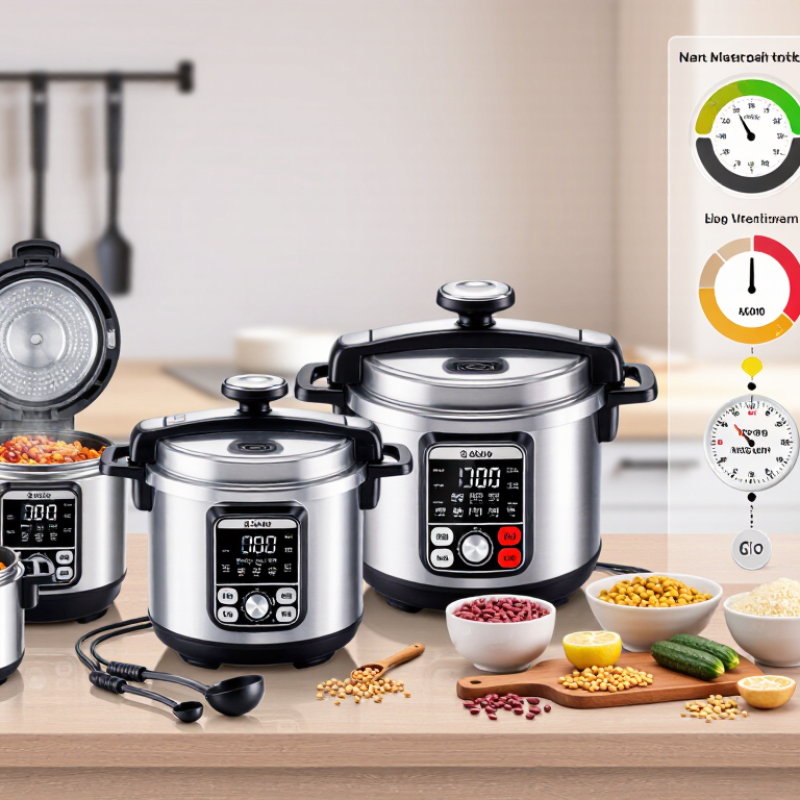
How Pressure Cookers Reduce Energy Use
A pressure cooker can use less energy because it cooks food faster in a sealed pot. As pressure rises, water boils at a higher temperature than it does in an uncovered pan. Beans, stews, and tough cuts of meat can soften in less time, so the cooker needs heat for fewer minutes. Less steam escapes, too. That helps. Still, savings depend on the recipe, cooker size, and how efficiently the heat source works.
Tips: Use only the liquid amount your cooker’s instructions require, and keep the sealing ring and valve clean. Once pressure is reached, lower the heat to the minimum that maintains it. A strong flame under the whole pot wastes heat. Let pressure release naturally when the recipe allows; the food continues cooking without extra burner time. Avoid filling beyond the marked limit, especially with foods that foam.
The results are not identical for every meal. A small portion may cook just as efficiently in a covered saucepan, while a full pot of dried beans may benefit more from pressure cooking. I have to admit, timing can take practice: too much liquid or an unexpectedly slow pressure release can reduce the advantage. Compare cooking time and burner use for meals you make often, rather than assuming every pressure-cooked dish saves energy.
What Is the Best Energy-Saving Pressure Cooker in 2026?
Estimated energy use for cooking one batch of dried beans
Pressure cookers can reduce energy use by shortening cooking time. This illustrative comparison estimates energy as average power multiplied by cooking time: 2.0 kWh for a conventional stovetop simmer (1.0 kW for 120 minutes), 0.7 kWh for a stovetop pressure cooker (1.0 kW for 42 minutes), and 0.8 kWh for an electric pressure cooker (0.8 kW for 60 minutes). Actual use varies with recipe, cooker, stove, and settings; these are modeled estimates, not product test results.
Types of Pressure Cookers and Their Energy Requirements
Types of Pressure Cookers and Their Energy Requirements
Stovetop pressure cookers rely on an external burner, so their energy use depends heavily on the heat source and how well the pot fits. The U.S. Department of Energy estimates that induction transfers about 85% of its energy to cookware, compared with roughly 75–80% for conventional electric cooking and 32% for gas. These are broad cooking estimates, not pressure-cooker test results. Keep the flame or heating zone close to the pot’s base; heat spilling around the sides is wasted.
Electric pressure cookers use a built-in heating element and thermostat to maintain pressure. They draw electricity while heating, then cycle on and off to hold temperature. Their sealed lid and shorter cooking times can reduce energy use, but results vary with portion size, recipe, and appliance design. A small batch still takes time to pressurize. That part is easy to overlook.
Induction-compatible stovetop models combine pressure cooking with an efficient heat-transfer method, but the cooker must have a magnetic base. The DOE’s estimates help compare cooktop types, yet they do not show the full energy used by a particular meal. For a practical comparison, note the cooktop type, cooking time, batch size, and electricity or fuel consumption. One imperfect measurement is better than assuming every cooker saves the same amount.
Criteria for Comparing Energy-Saving Pressure Cookers
A useful comparison starts with measured energy per meal, not wattage alone. A high-wattage cooker may reach pressure faster, yet total consumption depends on heating time, pressure control, and release method. Compare cookers using the same food, starting temperature, water amount, and batch size. Record electricity from switch-on through pressure release; keep-warm mode can quietly add use. Repeat the test. That matters.
Capacity should match typical cooking, since heating an oversized pot for one small portion may waste energy. Check whether pressure stays steady and the cooker lowers heat after reaching pressure. A clear pressure indicator, reliable seal, and available replacement parts support consistent use over time. Look for independent test data, but check what each test includes; some omit preheating or keep-warm time. These comparisons are imperfect, and results can vary by recipe. Avoid unnecessary lid checks, use recipe-appropriate liquid, and switch off promptly. A cooker efficient for beans may offer little advantage for a brief vegetable cycle.
What Is the Best Energy Saving Pressure Cooker in 2026? - Criteria for Comparing Energy-Saving Pressure Cookers
| Comparison Criterion |
Weight in This Scoring Framework |
How to Measure or Compare |
What to Look For |
| Energy used per cooking task |
35 points |
Measure energy input for the same recipe, ingredient quantity, starting temperature, and doneness. For electric models, use a plug-in energy meter and record kWh per batch. Compare fuel-burning models separately unless fuel input can be measured reliably. |
Lower measured energy per completed batch, without undercooking or needing a second cooking cycle. |
| Cooking performance |
20 points |
Cook the same food quantity in each cooker and record total time from heating through pressure release. Check whether the food reaches the same safe and intended doneness. |
Consistent results in a reasonable total time. Include time spent reaching pressure and releasing pressure, not just the programmed cooking time. |
| Pressure and temperature control |
15 points |
Check the operating instructions for pressure settings and test whether the cooker maintains its selected setting during a repeatable cooking task. |
Clear settings and stable operation. Do not compare pressure values without checking whether they are stated as gauge pressure or absolute pressure. |
| Capacity and batch size |
10 points |
Compare usable capacity with the amount of food normally cooked. Follow the manufacturer’s minimum-liquid and maximum-fill guidance; pressure cookers generally require headspace. |
A size that fits typical meals without routinely cooking unnecessarily large batches or exceeding fill limits. |
| Heat and steam losses |
10 points |
During a controlled test, note whether the cooker requires frequent reheating or releases steam continuously during pressure cooking. Follow the appliance’s normal operating instructions. |
Pressure is maintained without avoidable, continuous steam release. A brief release during pressure regulation may be normal for some designs. |
| Ease of operation and cleaning |
5 points |
Check how easily the sealing ring, lid, valve, and cooking pot can be inspected and cleaned according to the manual. |
Removable, accessible parts and clear cleaning instructions help support reliable use over time. |
| Durability and replacement parts |
5 points |
Review the warranty, availability of replacement sealing rings and other wear parts, and the manufacturer’s care and service information. |
Practical access to replacement parts and straightforward maintenance can reduce the need to replace the entire cooker when a wear part needs attention. |
| Scoring note: This is a comparison framework, not a ranking of specific products. The weights are suggested for evaluation. Actual energy use varies with cooker design, recipe, batch size, energy source, and cooking method; compare measured results under the same conditions. |
Features That Improve Efficiency in 2026 Models
In 2026, an energy-saving pressure cooker should control heat well, not merely offer a long feature list. A sealed lid traps steam, allowing food to cook under pressure and often reducing cooking time. That can mean less time using the heating element, especially for beans, grains, and tough cuts. Small details matter. A clear pressure indicator and a lid that locks securely help prevent wasted heat from escaping during cooking.
Look for adjustable pressure settings, since delicate vegetables need different treatment from dried chickpeas. A broad, flat base can transfer heat efficiently on compatible cooktops, while a well-insulated body may help retain warmth between heating cycles. Induction compatibility is useful only if your cooktop supports it. An automatic keep-warm mode is convenient, but leaving it on for hours still consumes electricity. Not every feature helps. A quick-release option may shorten waiting time, yet it does not necessarily save energy during the cooking itself. Compare stated power use, pot capacity, and cleaning needs; a cooker that is too large for everyday meals may be less efficient in practice. I’d treat efficiency claims cautiously, because actual savings depend on the recipe, portion size, and how often the cooker is used.
How to Choose the Best Pressure Cooker for Your Needs
The best pressure cooker for your kitchen depends on what you cook, how many people you feed, and how you cook. Check usable capacity, not just the number printed on the box; ingredients need room to expand, and many foods require space below the fill line. A 3- to 4-quart cooker may suit one or two people, while a larger household may need more. Energy use also depends on the recipe, appliance, and cooking habits. Shorter cooking times can help, but they do not guarantee lower energy use in every kitchen.
Compare electric and stovetop models against your routine. An electric cooker manages heat automatically, which can be useful if you prefer to set a timer and step away. A stovetop cooker heats and cools quickly, but results depend on your burner and attention. Look for clear pressure settings, a reliable locking lid, and an easy-to-use release valve. Check that the base suits your cooktop. Small details matter.
Think about cleanup, too. Removable parts should be easy to wash, and the sealing ring and pressure valve should be accessible for inspection. One detail is easy to miss: replacement parts and care instructions should be available. I’d also check the minimum liquid requirement before buying; it can make small meals less convenient. A cooker that fits your usual recipes may save more energy in practice than one with impressive claims but awkward controls.
FAQS
Cook the same food with equal water, starting temperature, and batch size. Measure electricity from switch-on through pressure release, including keep-warm time. Repeat the test. Results can vary.
Not necessarily. Higher wattage may shorten heating time, but total use also depends on pressure control and release method.
Match the usable capacity to your usual meals. A 3- to 4-quart cooker may suit one or two people. Ingredients still need room below the fill line.
It depends on your routine, recipe, and cooktop. Electric models manage heat automatically; stovetop models heat and cool quickly but need attention.
Look for steady pressure, a clear pressure indicator, a reliable seal, and a locking lid. Small details matter.
Check the minimum liquid requirement, cooktop compatibility, and how easily you can inspect the sealing ring and pressure valve. Easy cleanup helps.
No. Heating and keep-warm time also count. A cooker suited to your usual recipes may be more practical than one with impressive claims.
Avoid unnecessary lid checks, use the recipe’s recommended liquid, and switch off promptly. I might still forget the keep-warm setting sometimes.
Conclusion
An Energy Saving Pressure Cooker reduces cooking time by trapping steam and raising pressure, helping food cook faster while using less electricity or gas than many conventional methods. The best choice in 2026 depends partly on the type of cooker: electric models offer automated temperature and timing controls, while stovetop models rely on a compatible heat source and the cook’s attention. Comparing energy use, capacity, cooking performance, safety features, durability, and ease of cleaning can help identify a practical, efficient option.
Newer efficiency-focused features may include precise sensors, insulated construction, programmable settings, and controls that maintain pressure without unnecessary heating. To choose the right cooker, consider household size, typical meals, available kitchen space, and whether you prefer electric convenience or stovetop flexibility. A well-matched cooker, used with appropriate quantities of food and liquid and kept in good condition, can make everyday cooking more efficient without sacrificing ease or results.

 Zhenmei Electrical